
Traffic in the Philippines: complete guide for tourists, expats and snowbirds
Traffic in the Philippines is an experience in itself. For many travelers it is one of the first things they notice upon arrival. Where in the Netherlands traffic rules are strictly adhered to and infrastructure is predictable, traffic in the Philippines can feel dynamic, chaotic and sometimes even overwhelming.
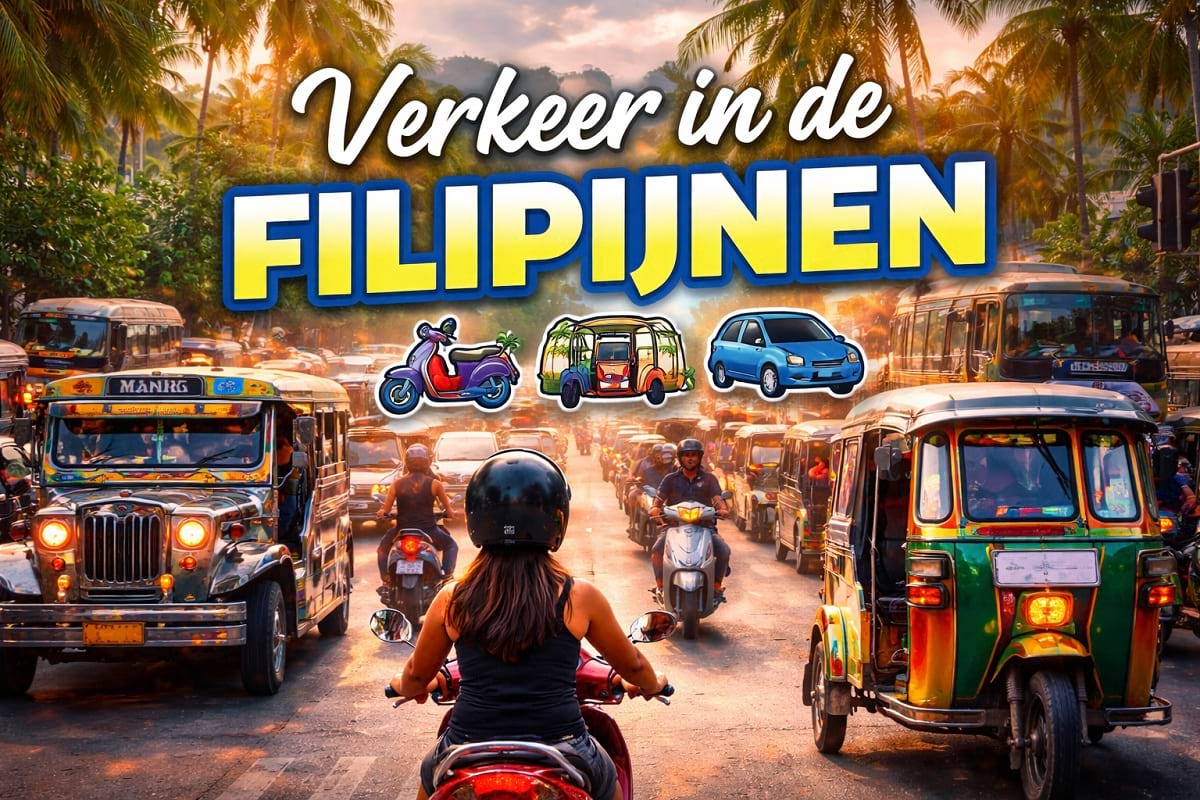
Cars, jeepneys, tricycles, scooters, bao baos, trucks, street vendors, crossing dogs and even caribou sometimes share the same road. Traffic lights are not always strictly followed, lanes seem flexible and improvisation is the rule rather than the exception.
However, this does not automatically mean that traffic is dangerous or unworkable. It works according to its own logic. In this extensive guide you can read everything about traffic rules in the Philippines, regional differences, renting a scooter, renting a car, driving license rules, safety and whether it is wise to drive yourself.
Why does traffic in the Philippines feel chaotic?
The feeling of chaos mainly arises from differences in traffic culture. In the Netherlands, rules are leading. In the Philippines, anticipation plays a greater role than formal rules.
Some characteristics of Philippine traffic:
- Many vehicles with large speed differences
- Flexible use of lanes
- Many unexpected stops (e.g. jeepneys)
- Motorcycles and scooters driving between cars
- Limited enforcement in some regions
Where a Dutch person expects everyone to keep to their lane, a Filipino expects everyone to move continuously. That difference in expectations creates the feeling of chaos.
Regional differences in traffic
Metro Manila
Manila is known as one of the busiest urban traffic areas in Southeast Asia. Traffic jams are a daily reality. During peak hours, a 10-kilometer ride can take more than an hour.
Here you see:
- Jeepneys that suddenly stop
- Buses that merge assertively
- Motorcycles between cars
- Busy intersections without a clear structure
Cebu City
Cebu is busy but more organized Than Manila. traffic is intense in the center, but quieter outside the city.
Davao
Davao is known for being relatively orderly. Here, traffic enforcement is taken more seriously than in many other cities.
Smaller islands
On islands such as Siquijor, Camiguin and parts of Palawan traffic is calmer. Yet roads can be narrow, unpaved or poorly lit.
Which vehicles do you encounter?
Jeepneys
Jeepneys are iconic public transportation. They stop where passengers board and disembark. This causes unexpected braking moments.
Tricycles and Bao Baos
Motorcycles with sidecars that function as taxis. They have a dominant presence, especially outside large cities. Bao Baos are tricycles that are more modern and more comfortable for many tourists.
Scooters and motorcycles
Motorcycles are extremely popular. They move flexibly between cars.
Caribou
In rural areas you can still see water buffalos pulling carts.
Trucks and SUVs
In addition to slow traffic, heavy vehicles also travel at significantly higher speeds.
Rent a scooter in the Philippines
Renting a scooter is one of the most popular ways to explore islands.
Scooter rental costs
- €6 – €12 per day
- Longer rental periods are often cheaper
Where is scooter riding suitable?
When is it less suitable?
- Metro Manila
- Busy parts of Cebu City
Safety tips
- Always wear a helmet
- Check brakes
- Take photos of existing damage
- Do not drive on unlit roads at night
Rent a car in the Philippines
Renting a car provides more comfort, especially for longer distances.
Costs
- Small car: €25 – €50 per day
- SUV: €40 – €80 per day
However, in busy cities it can be stressful due to traffic jams and assertive driving.
Is driving yourself wise?
It is wise if:
- You have experience with Asian traffic
- You stay on quiet islands
- You want flexibility
Less sensible if:
- You have little driving experience
- Unexpected situations make you nervous
- You only have to travel short distances
For short vacations, many travelers opt for Grab or taxis.
Traffic rules in the Philippines
Officially, people drive on the right. There are speed limits, traffic lights and priority rules.
In practice, rules are sometimes interpreted flexibly.
Driving license for tourists
Tourists are temporarily allowed to drive with a valid driver's license. A Philippine driver's license is sometimes required for a long-term stay.
Greatest risks in traffic
- Bad road surface
- Unexpected maneuvers
- Animals crossing
- Inadequate street lighting
- Sudden rainfall
Traffic accidents and statistics
Road accidents are common, especially in urban areas.
Motorcycles are relatively often involved in accidents.
Public transport as an alternative
Alternatives to driving yourself:
- Grab (similar to Uber)
- Taxis
- Minivans
- Buses
- Ferries between islands
Practical tips for safe driving
- Drive defensively
- Plan extra travel time
- Use navigation apps
- Avoid driving in heavy rain
- Stay calm in heavy traffic
Offline navigation while driving in the Philippines
When you travel through the Philippines by car, motorcycle or scooter, a good navigation app is very useful. Keep in mind that mobile coverage outside cities and tourist areas is not reliable everywhere.
A useful addition to Google Maps is Organic Maps. With this free navigation app you can download maps in advance and then navigate completely offline. So you don't need mobile data or a Philippine SIM card while on the road. This is especially practical during longer road trips and drives through rural or remote areas.
Organic Maps also has the advantage that the app is strongly focused on privacy and works without commercial tracking. The maps are based on OpenStreetMap and can be saved locally on your phone.
Keep in mind that no navigation app can guarantee exactly what you will find along the way. Road conditions in the Philippines can change quickly and information such as paved or unpaved roads may be incomplete or outdated. This applies to both Organic Maps and Google Maps.
You can read more about this in our extensive article: Organic Maps in the Philippines: free offline navigation without internet.
How dangerous is traffic in the Philippines really?
Traffic in the Philippines may seem chaotic, but it functions according to its own logic. In big cities it is intense, on islands it is quieter but less structured.
Driving yourself is possible, but requires experience and alertness. For many travelers, using taxis or grab is More comfortable.
Those who adapt and drive defensively can move safely. However, never underestimate traffic.
FAQ about traffic in the Philippines
Is traffic in the Philippines dangerous?
It can be chaotic, especially in big cities. Defensive driving is essential.
Can you rent a scooter as a tourist?
Yes, this is especially common on islands.
Do you need an international driver's license?
For short stays usually not mandatory, but recommended.
Is Manila difficult to drive in?
Yes, Manila has intense traffic and heavy traffic jams.
What is the safest means of transportation?
That depends on the region. Grab or taxis are often comfortable and safe.
This post was last updated on August 12, 2026