
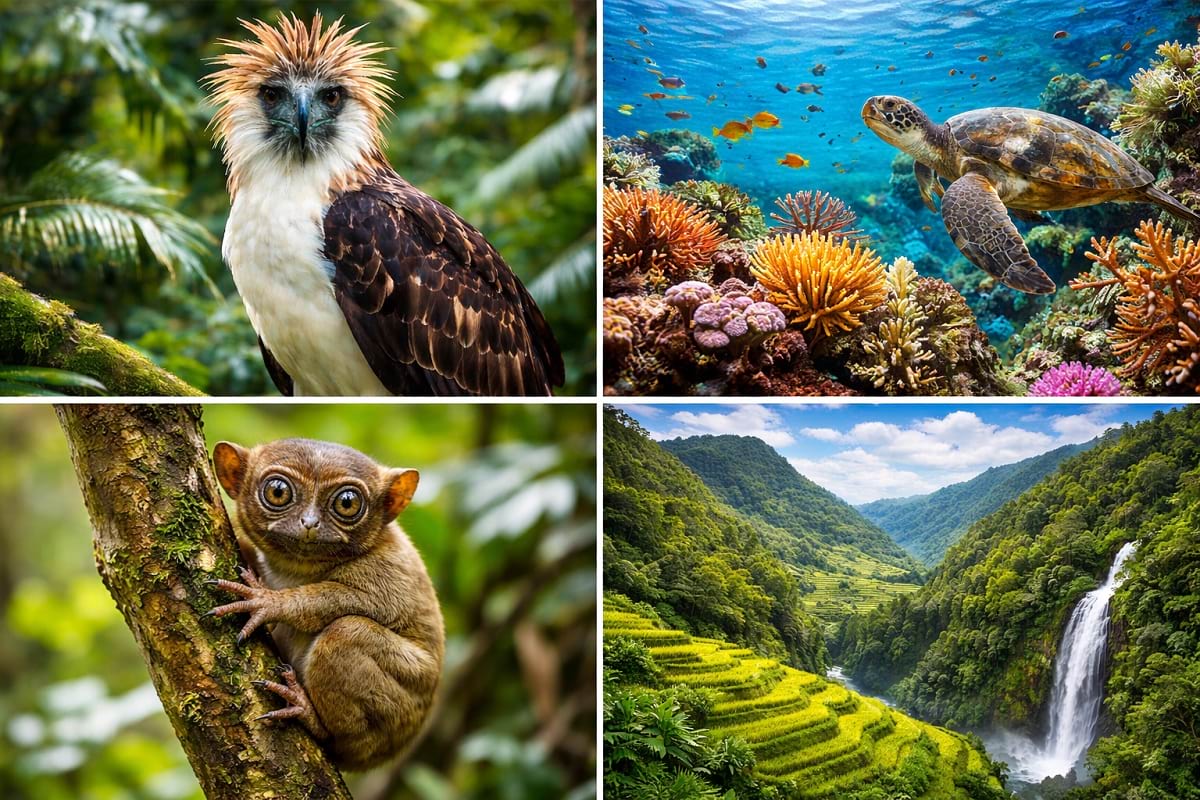
The Philippines are among the most biodiverse countries in the world and are a true natural paradise in Southeast Asia. The archipelago consists of more than 7,000 islands and is home to an exceptional variety of ecosystems. From tropical rainforests and mountain ranges to mangrove forests and colorful coral reefs: the natural wealth of the country is impressive and unique.
Due to the geographical isolation of islands, the tropical climate and the large differences in altitude, countless plant and animal species have developed independently. Many of these species occur exclusively in the Philippines and are therefore endemic. This makes the country one of the most important biodiversity hotspots in the world.
Why the Philippines are so special
The Philippines' enormous biodiversity is the result of millions of years of evolution. Island isolation has allowed species to evolve separately, leading to unique ones flora and fauna.
- Island demism – many species occur only on one island or region
- Varied landscapes – to put away, forests, wetlands, coastal areas and reefs
- Tropical climate – warm temperatures and high humidity promote species diversity
The combination of these factors makes the Philippines one of the most ecologically valuable countries in Asia.
Flora: tropical wealth in abundance
The Philippine flora includes thousands of plant species, including a large number of endemic trees, ferns, orchids and other tropical plants. Rainforests up Luzon, Mindanao and the Visayas are home to complex ecosystems in which plants and animals are closely linked.
Orchids are a striking part of this biodiversity. Hundreds of wild species grow in forests, on rocks and high in treetops. Palm trees, bamboo species and tropical flower plants are also well represented.
Fauna: unique animals from land and sea
Mammals
Among the most notable mammals is the Philippine tarsier, a small primate with big eyes that has adapted to life in dense forests. The tamaraw, a rare wild buffalo in Mindoro, is another example of endemic species.
Birds
The Philippines is a paradise for bird watchers. Hundreds of bird species live in forests, wetlands and mountain areas. The Philippine eagle, one of the largest eagles in the world, is the best-known example of the country's unique avifauna.
Reptiles and amphibians
Reptiles and amphibians also contribute to biodiversity. The Philippine crocodile is one of the rarest crocodile species in the world. In addition, there are numerous lizards, snakes and frog species that are specifically adapted to local living conditions.
Marine biodiversity
Underwater, the biodiversity is just as impressive. The Philippines is located in the center of one of the most species-rich marine areas in the world. Coral reefs, seagrass beds and mangroves provide habitats for thousands of species of fish, sea turtles, manta rays and other marine animals.
Important ecosystems
- Rainforests – are home to an enormous variety of plants, birds and mammals
- Mangrove forests – protect coastlines and provide breeding grounds for fish
- Mountain areas – unique species adapted to cooler altitudes
- Coral reefs – one of the richest marine ecosystems in the world
Each ecosystem plays a crucial role in the ecological balance of the country.
Threats to biodiversity
Despite the natural wealth, biodiversity is under pressure. deforestation, Agricultural expansion, overfishing, pollution and climate change are negatively impacting habitats and species populations.
Habitat fragmentation causes populations to become isolated, which reduces their chances Of survival. illegal wildlife trade also poses a risk to vulnerable species.
Nature conservation and protected areas
To protect this unique biodiversity, numerous national parks and marine reserves have been established in the Philippines. These protected areas help preserve ecosystems and provide a safe habitat for endangered species.
Reforestation projects, nature education and sustainable fishing practices contribute to the conservation Of biodiversity. local communities also play an important role in protecting their natural environment.
Ecotourism as a positive force
Ecotourism offers opportunities to combine nature conservation with economic development. By traveling responsibly and visiting nature reserves with respect, travelers can contribute to the conservation of biodiversity.
- Choose sustainable accommodations
- Go with local nature guides
- Respect flora and fauna
Natural paradise
The Philippines is an exceptional natural paradise with unprecedented biodiversity. From tropical rainforests and unique bird species to colorful coral reefs and rare mammals, the country offers a rich variety of ecosystems that are of great importance worldwide. Protecting this biodiversity is essential for future generations and for the preservation of one of the most special nature reserves on earth.
This post was last updated on February 14, 2026